Breakbulk Asia Keynote Mehmet Öğütçü Calls for Bolder Business Leaders
By Luke King
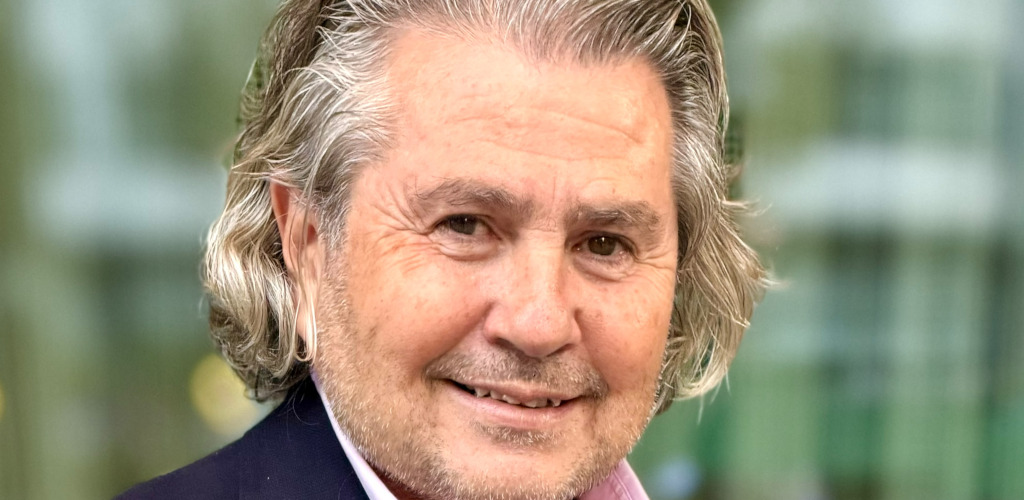
Ahead of his keynote speech at Breakbulk Asia, energy executive and strategic adviser Mehmet Öğütçü reflects on what leadership means in an era of geopolitical uncertainty. The leaders who matter, he argues, are those prepared to make bold calls when the path ahead is anything but clear.
From Issue 4, 2026 of Breakbulk Magazine
(5-minute read)
Mehmet Öğütçü is quite literally a man in motion. Chatting over several weeks, I catch him preparing to address government and business leaders in India one day, traveling between homes in London, Türkiye and southern France another.
From the outset, his appeal as an international speaker is apparent. A former Turkish diplomat turned energy executive and strategic adviser, Öğütçü moves easily between the worlds of geopolitics and business, which are themselves becoming hard to separate. He has spent decades negotiating their meeting point, and believes their increasingly turbulent interaction offers opportunity for those willing to seize it.
“Very often, good business might come from conflict regions,” he says. “The margins might increase incredibly.”
It is a provocative message for an industry contending with disrupted shipping routes, expensive insurance and uncertain investment decisions. But the keynote speaker at Breakbulk Asia argues that difficult conditions reward those with the knowledge, relationships and, most importantly, the leadership to navigate them.
Diplomacy Meets Business
Raised in Ankara in a family he describes as “below middle class,” Öğütçü worked hard to reach Mülkiye, Ankara University’s prestigious Faculty of Political Sciences, long associated with the training of diplomats and senior public officials.
His first job was as a bank inspector. The pay was better than diplomacy offered, but a life immersed in figures held little charm. Instead, he moved to the prime minister’s office, becoming an adviser and speechwriter to Turgut Özal.
After two years, Özal sent him to London for training at the Central Office of Information, where he studied public information techniques and dealing with the press. A six-month assignment became a longer stay when he decided to pursue a master’s degree at the London School of Economics. Work with NATO followed before he returned to Türkiye and joined the diplomatic service.
Assigned to the NATO department during the Cold War, he was on what he describes as a fast track. His next move, however, was one of his own choice: Beijing. “Many people saw China as a poor country,” he recalls, but reading its history had given him a different perspective. The curious young diplomat wanted to understand its people, learn Mandarin and see its reforms firsthand.
“I knew that learning more about China, its language and its people would serve me well in the long term,” Öğütçü says. His posting from 1989 to 1992 placed him in China during an extraordinary period. He recalls being in Tiananmen Square on his bicycle as events unfolded, and meeting Chinese leaders through his diplomatic work. He has recently completed a book of personal recollections, “There Is No Escaping China.”
Spells in Brussels and Paris followed. At the Organization for Economic Cooperation and Development, he established its China program and worked across the Asia-Pacific region. The experience sharpened his negotiating skills: different governments brought different priorities, expectations and egos to the table.
BG Group subsequently recruited him to London. After six or seven years, he decided to build something of his own, establishing the London Energy Club, a closed-door discussion forum operating under Chatham House Rule, and a commercial advisory business.
Diplomacy taught him relationship management, while business provided a sharper test. As chairman of the London Energy Club and Global Resources Partners, a strategic advisory and investment firm, he draws on both, but has little patience for cordial exchanges that produce no tangible result.
“Niceties do not generate business,” Öğütçü says. The ability to negotiate and compromise remains useful, but must ultimately help a company identify an opportunity and create value. “You have to focus on creating value, creating business and profit for your company. Otherwise, you are useless.”
That commercial discipline does not mean rushing to close a deal, however. Öğütçü believes pressure to deliver results can often lead executives to neglect the groundwork that yields success. “People often rush to do deals because they are pushed by their boards. They have to show results in the next quarter.”
His diplomatic experience taught him to respect competing interests; business taught him to turn that understanding into commercial success. Both require attention to how decisions are made and what matters to the people making them.
“You have to appreciate the business culture, the personal behavior of the people you are dealing with,” he says. “Do a little bit of research first and understand the country’s traditions and how they do business.”
Asia’s Economic Gravity
That experience informs his view of Asia, where he cautions against assuming that a familiar commercial approach will work everywhere. It also underpins his conviction that China’s influence will endure despite the pressures surrounding it.
He sees its development as a reemergence rooted in a much longer history, believing that its advantage lies in the concentration of suppliers, engineers, factories, infrastructure and finance supporting industrial production. “You cannot recreate that ecosystem overnight in another country. The intelligent approach is to diversify around China, not pretend that China no longer matters.”
India offers substantial opportunities, but he doubts that it will simply serve as a counterweight to China. Its leaders will pursue Indian interests, including cooperation where those interests overlap.
At a recent Goa conference, an Indian general told Öğütçü that India and China should cooperate to protect the Strait of Hormuz and Bab el-Mandeb, since both depend on energy moving through those routes. Öğütçü cites the exchange as evidence that common commercial needs can complicate apparently straightforward geopolitical alignments.
He argues that India’s manufacturing ambitions need to translate into execution, and he identifies land acquisition, regulatory consistency, infrastructure reliability and financing as issues investors must examine. Southeast Asia, meanwhile, is developing a more distributed manufacturing network, with Indonesia, Vietnam, Malaysia and Thailand consolidating their positions and Singapore providing financial and maritime coordination.
In terms of project cargo, he sees electricity infrastructure as an increasingly important source of demand. “Follow the capital,” he says. “And increasingly, follow the electricity.” Data centers require generation, transformers, substations, transmission and storage, he points out, while industrial development necessitates supporting infrastructure well beyond the factory gate. His argument is that logistics companies should appreciate the wider investment landscape, rather than pursue shipments in isolation.
Courage and Connection
 For Öğütçü, identifying opportunity is only the beginning and acting on it requires bold leaders who are unafraid to make decisions when circumstances change. “You might have the greatest ideas, a wonderful team and the strategy,” he says. “But if you don’t have a crazy and smart leader, nothing happens.”
Smaller energy businesses have long operated in countries where security concerns deter larger competitors. He believes adaptable companies can find profitable niches in such markets, provided they understand the exposure and have safeguards in place. The principle extends to project logistics, where difficult delivery conditions increase the value of capable operators.
With higher shipping and insurance costs, risks to vessels and terminals, and less predictable delivery times, comes opportunity, suggests Öğütçü. Success hinges on a company’s ability to manage those conditions. “But you have to be agile. You have to move very quickly,” he says. “Don’t do too much planning.”
Direct engagement is a key feature of his playbook. Executives should travel to the markets where they want to work, meet prospective partners and assess conditions themselves. Calculations and artificial intelligence can never replace the human connection.
“Take the trouble and go to India, go to the Gulf, go to Saudi Arabia, wherever you want to do business, and talk directly,” he says. “Eye to eye, face to face.”
Creativity matters in financing, too. Where a customer has resources but little available cash, he suggests flexibility: infrastructure can be delivered in exchange for commodities, with a trader helping to turn those commodities into payment. Difficult financing conditions demand persistence and novel ways of structuring business.
Away from negotiations, he applies his energy to more tangible pursuits. In Türkiye, he restores old Greek houses with a stonemason from Mardin, preserving buildings he regards as part of the country’s legacy. He describes the work as a “responsibility” rather than a commercial venture.
Öğütçü and wife Aynur Tattersall also maintain an olive grove of about 1,000 trees. She is a “connoisseur,” and much of their production goes to friends. “It’s a passion, actually, and I spend more than I earn. My wife loves it more than I do, therefore I naturally have to be of the same opinion,” he jokes.
The olive grove offers a balance to a career spent pursuing opportunities across borders. In Singapore, he will bring that experience to his Breakbulk Asia keynote on Nov. 19.
His message for a project logistics sector facing uncertainty retains the practical optimism of someone who has repeatedly changed course himself: “Where there is business, there is always a way.”
Mehmet Öğütçü will be delivering his Breakbulk Asia 2026 keynote speech, Winning the Next 20 Years by Rethinking Energy, Infrastructure and Supply Chains, on the Breakbulk Live Stage on Thursday, Nov. 19 from 10:40am - 11:10am.