Industry Leaders Assess Region’s Opportunities and Shifting Trade Routes
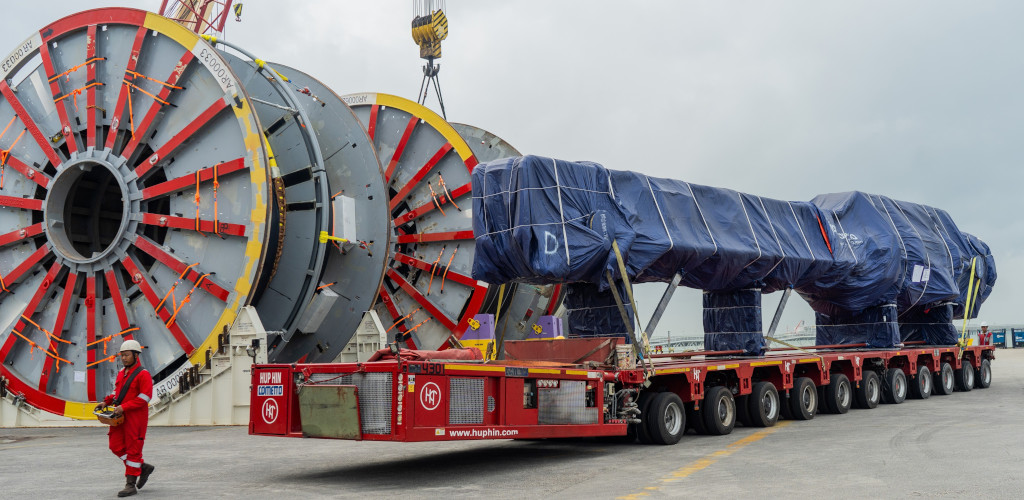
For Breakbulk's Global Outlook 2027 series, where industry executives assess opportunities, challenges, shifting trade routes and emerging disruptions across Asia.
From Issue 4, 2027 of Breakbulk Magazine.
(4-minute read)
Q: Looking ahead to 2027, how would you describe the business outlook for Asia’s breakbulk and project cargo sector?
Ling Ling Lim, managing director, Trans Global Projects Malaysia:
The outlook remains positive, although growth will vary considerably between markets and sectors. Energy, infrastructure and industrial investment continue to create opportunities for project cargo across Asia. Southeast Asia in particular is expected to maintain solid economic growth in 2027. At the same time, geopolitical tensions, energy costs and trade uncertainty mean that project decisions and schedules may remain less predictable. For logistics providers, this creates a market with good underlying demand, but one that requires flexibility and strong local knowledge.
Koichi Kaizu, logistics subject matter expert for module transportation, JGC:
Demand is expected to remain strong, driven by liquefied natural gas (LNG), energy transition and industrial projects requiring large-scale module transportation across Asia.
Bobby Zhu, managing director, Chinaland Shipping:
I am cautiously optimistic about Asia’s breakbulk and project cargo outlook for next year. Asia combines a substantial industrial investment pipeline with the manufacturing capacity to supply projects worldwide. From a Chinese shipowner and operator’s perspective, opportunities will come from both equipment exports and growing demand within Asia. However, project announcements will not all translate into shipments on schedule. Financing, approvals and execution will determine actual volumes. We expect an uneven market, with stronger opportunities for carriers that can match suitable tonnage with customers’ delivery requirements.
Dharmendra Gangrade, a thought leader on global shipping and logistics:
My view for 2027 is cautiously optimistic. I expect Asia, with India and the Middle East playing increasingly important roles, to remain one of the strongest markets for breakbulk and project logistics. Investments in energy, infrastructure, manufacturing and the energy transition should sustain cargo volumes. However, I believe the real issue will be predictability rather than demand. Geopolitical developments, specialized vessel availability and infrastructure constraints will keep challenging schedules and costs. For cargo owners, resilience and execution certainty will matter as much as freight competitiveness.
Q: Which sectors or specific projects do you expect to be the biggest drivers of the region’s breakbulk and project cargo volumes in 2027?
LL: Power and energy should remain among the main sources of project cargo demand. Across Southeast Asia, investment in power generation, grids, renewable energy and battery energy storage systems (BESS) is creating opportunities, alongside gas and LNG infrastructure. Malaysia is also seeing strong data center development, bringing further demand for power infrastructure and associated equipment. Industrial development, infrastructure and steel-related cargo should provide additional opportunities. Together, these sectors should support a diverse project cargo market across the region in 2027.
KK: LNG, petrochemicals, renewable energy and mining projects will have steady demand. In addition, data center projects will generate significant project cargo volumes on top of those conventional projects.
BZ: I would put power and grid investment high on the list, alongside wind energy, industrial plant construction and mineral processing. For breakbulk carriers, the cargo opportunities include transformers, wind turbine components, heavy machinery and prefabricated modules. Southeast Asia’s manufacturing expansion and India’s infrastructure investment deserve attention, while Chinese equipment suppliers will remain important to projects across Asia and beyond. Data centers could also generate demand through their power and cooling infrastructure. For 2027 planning, I would focus on projects with committed funding and clear equipment delivery schedules.
DG: I see energy, infrastructure and industrial investment as the major demand engines. India’s investments in renewables, power transmission, hydrocarbons, heavy manufacturing and infrastructure will generate sizeable project movements. I also expect increasing movement of equipment between Indian manufacturing clusters and Middle Eastern projects, particularly heavy engineering, power, process-industry and fabricated equipment, strengthening the India- Gulf project logistics ecosystem.
Q: What do you see as the biggest challenges facing the sector in Asia over the coming year?
 LL: Uncertainty remains the biggest challenge. Geopolitical tensions can quickly affect shipping routes, fuel costs and supply chains, while extreme weather and trade-policy changes add further pressure. Southeast Asia’s dependence on imported energy and concentrated supply routes also leaves the region exposed to disruption. For project logistics, where cargo often requires specialist equipment and careful planning, changes can have significant operational consequences. Maintaining alternative routing options and involving logistics teams early in project planning will therefore become increasingly important.
KK: Limited heavy-lift assets and geopolitical uncertainty remain key challenges. We are also concerned about the continuous port congestion in all major ports in Asia, which presents us with further uncertainty for scheduling or resourcing vessels.
BZ: It’s maintaining delivery certainty when project schedules, trade rules and voyage costs can all change. For carriers, a delayed cargo can disrupt several subsequent commitments, particularly when specialized tonnage has been positioned in advance. Larger components also put pressure on port handling, inland transport and engineering capabilities. Meanwhile, cargo growth does not automatically mean stronger earnings: vessel supply and competition still matter. We need to price operational risk properly and understand the readiness of the entire transport chain before committing capacity.
DG: For me, the biggest challenge is managing uncertainty without compromising project commitments. Geopolitical disruption can change routing, vessel availability, insurance exposure, transit time and freight economics very quickly. At the same time, project cargo is becoming larger and more complex, while port and hinterland capabilities do not always develop at the same pace. My experience is that logistics can no longer be treated as an activity that starts after procurement. Early integration of engineering, sourcing, logistics, ports and carriers will increasingly determine both project cost and schedule reliability.
Q: How are changing trade routes, sourcing strategies and supply chain relationships affecting project cargo flows in and out of the region? Are you seeing new trade corridors or emerging markets that could become more important in 2027?
LL: We are seeing supply chains become more diversified rather than simply shifting from one location to another. China remains highly important, while Southeast Asia is developing further as both a manufacturing base and a destination for investment. Growing intra-Asian trade and closer links with markets including India, Australia and the Middle East are also creating a broader network of project cargo flows. For logistics providers, this means being able to connect multiple origins, destinations and transport modes rather than relying on established corridors alone.
KK: Growing local content requirements are influencing sourcing strategies. In some countries, expectations exceed local industrial and logistics capabilities, creating major challenges for efficient project execution and cargo movements.
BZ: Supply-chain diversification is creating additional cargo movements within Asia. New factories in Southeast Asia still need imported production equipment, often from China, while regional fabrication adds new origins for project shipments. We expect China- Southeast Asia links to deepen, with India also becoming more important as both a destination and a manufacturing base. Beyond Asia, routes serving Middle Eastern and African projects warrant attention, subject to security and financing conditions. For carriers, more dispersed sourcing increases the value of flexible port coverage and coordination across multiple loading points.
DG: I see a clear move from cost-led sourcing toward resilience-led sourcing. Companies are looking more closely at total landed cost, geopolitical exposure, lead-time certainty and alternative supply bases. India is becoming increasingly relevant as both a manufacturing and project-export hub, while Saudi Arabia, the UAE and Oman are building deeper local industrial ecosystems. In my view, India-Gulf corridors, India-Africa via Middle Eastern hubs, intra-GCC movements and stronger Southeast Asia-India- Middle East linkages deserve particular attention in 2027. These changes will progressively reshape traditional Asia-centric project cargo flows.
Q: With disruption becoming an increasingly persistent feature of global trade, how does the breakbulk and project cargo sector need to adapt?
LL: The industry needs to treat disruption as part of project planning rather than as an exception. That means assessing alternative routes, ports and transport options early, monitoring developments closely and maintaining strong local relationships across the supply chain. Communication is equally important: clients need to understand quickly how changes may affect schedules and costs. Project cargo does not always offer easy alternatives once a movement has started, so detailed preparation and the ability to adjust plans before problems become critical are increasingly important.
KK: Disruption is forcing EPC contractors such as JGC to prioritize supply chain resilience over pure cost optimization. Thus, diversified sourcing, earlier logistics integration and greater execution flexibility will become key competitive advantages for us — this would be my message to the breakbulk industry.
BZ: We need to build contingency planning into the original transport solution. That means assessing alternative ports and routes, allowing realistic schedule buffers, and agreeing how additional costs will be handled before disruption occurs. Ship operators, forwarders and cargo owners should engage earlier, while equipment dimensions and delivery sequences can still be adjusted. Better shipment visibility helps, but experienced operations teams and reliable local partners remain essential. Commercially, customers and carriers need arrangements that support reliable service through changing conditions. Flexibility has a cost, which should be recognized.
DG: From a cargo-owner perspective, resilience must now be engineered into the project, not added when disruption occurs. For complex breakbulk and project cargo, the ability to switch routes, gateways or transport solutions cannot be created overnight. It requires early logistics involvement, optionality in supply chain design and deeper strategic relationships with carriers, ports and logistics partners. Digital visibility is important, but visibility without response capability has limited value. In an increasingly volatile environment, execution certainty will become a competitive advantage in its own right.
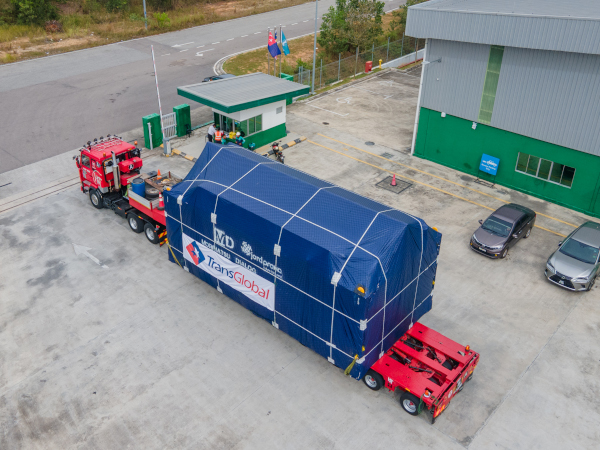
Photos: Trans Global Projects managed the handling and loading of 12 evaporators and condensers in Malaysia as part of an international project cargo movement to Australia. Credit: TGP